
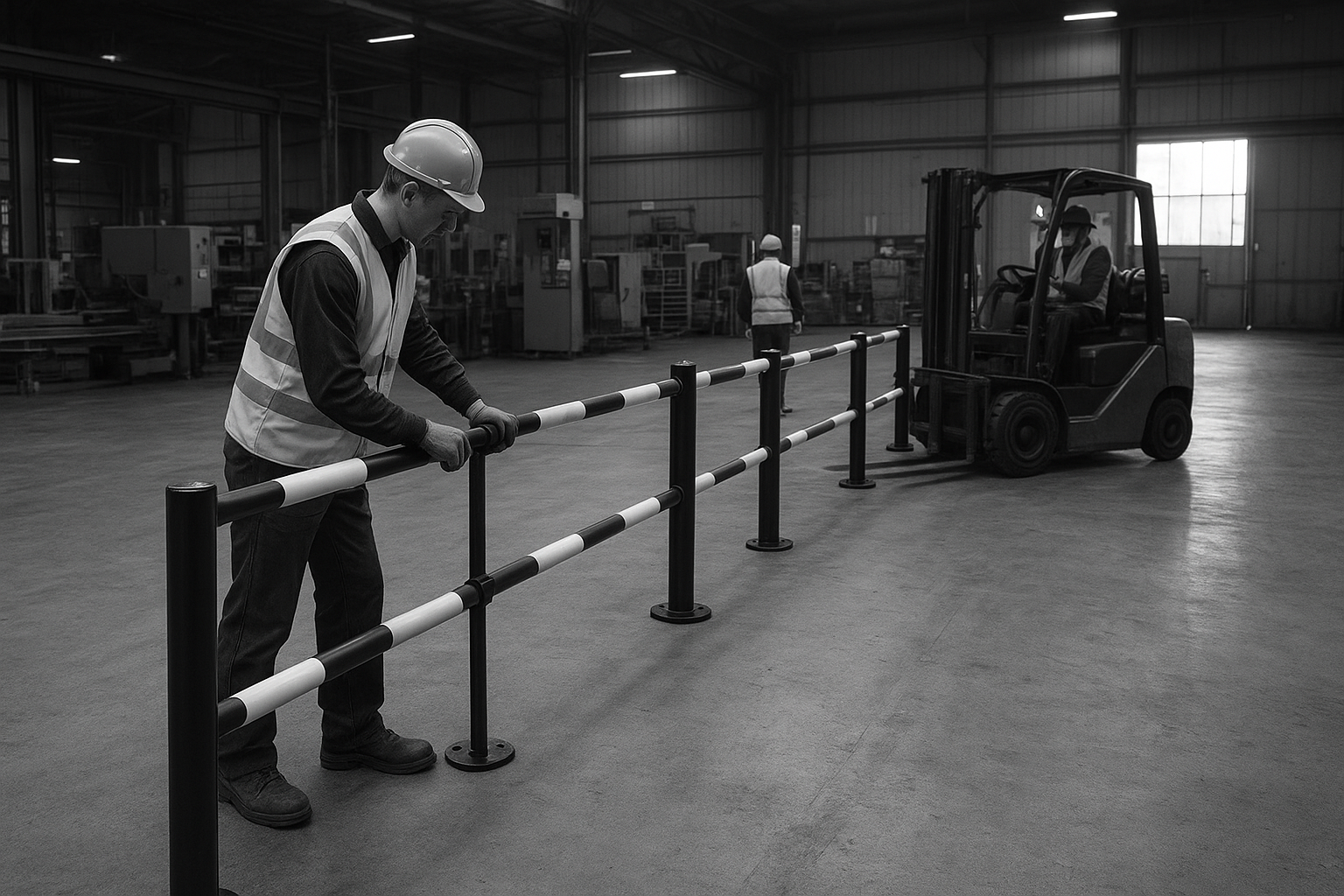
Updating safety standards across an industrial or commercial site is never just a box-ticking exercise. As legislation evolves and businesses expand, the risks, workflows, and engineering requirements on site also shift. Without a clear management plan or overarching implementation outline, upgrades can become reactive, inconsistent, and far more costly than necessary. A comprehensive plan provides structure, accountability, and visibility—ensuring that safety improvements are not only compliant but effective, sustainable, and aligned with business operations.
A well-developed scope is the backbone of any successful safety-upgrade program. When a site has a unified scope, each team understands what the end state looks like and how their work contributes to it. This avoids the common trap of treating each hazard, system upgrade, or equipment change as an isolated problem to fix. Instead, the process becomes strategic rather than piecemeal. A clear scope also provides transparency for stakeholders and contractors, reducing rework, duplication, and conflicting interpretations of the required safety outcomes.
Just as critical as a strong scope is having a dedicated manager overseeing the full implementation. A good project or safety manager ensures that works are sequenced efficiently, communication flows clearly, and decisions consider the bigger picture rather than short-term convenience. This holistic oversight allows the manager to identify interactions between tasks—such as when a plant shutdown, documentation upgrade, and equipment installation can be coordinated simultaneously—saving significant time and resources. Instead of juggling disjointed stand-alone projects, the entire site transitions through a coordinated, controlled improvement process.
Ultimately, investing in a site-wide management plan pays dividends in safety, compliance, and operational continuity. It empowers businesses to modernise their safety standards in a structured, predictable way while minimising disruption to day-to-day operations. By approaching upgrades as a unified program rather than a collection of small, disconnected tasks, organisations can lift the site’s overall safety culture and create long-term resilience.
No responses yet