
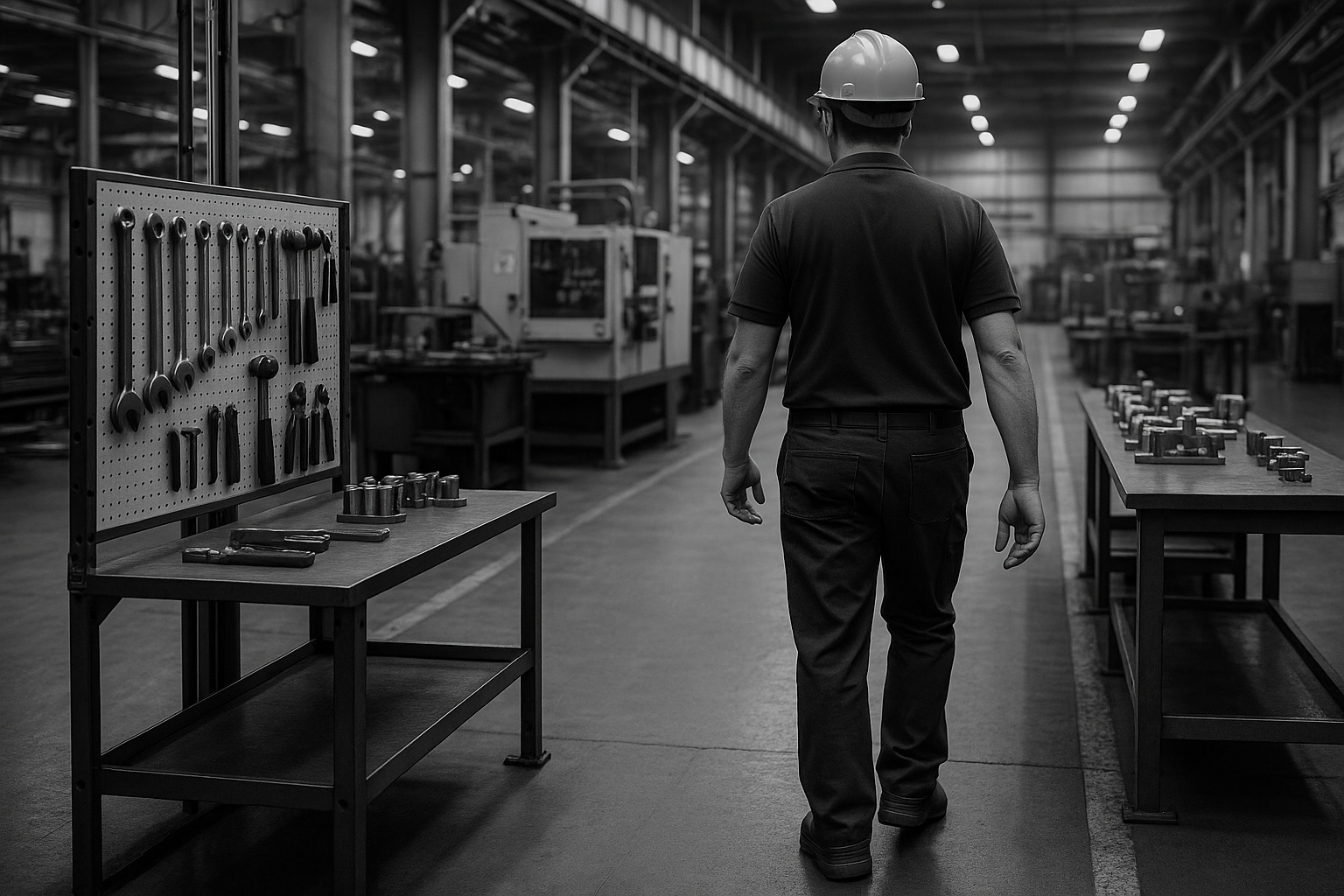
When tools and materials are not located near the work area, operators must spend time walking back and forth to collect them. This “waste of motion” is one of the seven wastes of lean (known as muda in Japanese lean philosophy). While walking may not seem like a big issue in the moment, over time it accumulates into a significant drain on productivity.
By designing assembly stations where everything is stored in logical, easy-to-reach locations, manufacturers can:
- Eliminate wasted steps that do not add value to the product.
- Reduce fatigue for workers, improving safety and focus.
- Increase output without adding labour or equipment.
- Standardize workflows, ensuring consistency and quality.
How Small Time Wastes Add Up
Let’s put this into perspective. Imagine an operator needs to walk 20 seconds each way to fetch a tool or part five times per hour. That’s 200 seconds (3 minutes and 20 seconds) per hour spent walking—not working.
Now scale that up:
- Per day (8 hours): ~27 minutes lost.
- Per week (5 days): ~2 hours and 15 minutes lost.
- Per month (4 weeks): ~9 hours lost.
- Per year (48 working weeks): ~18 full shifts (72 hours) lost—just from unnecessary walking.
And this is only for one operator. Multiply it across an entire production team, and the impact is staggering. A simple redesign of the assembly workspace—placing tools and parts within arm’s reach—can reclaim hundreds of productive hours annually.
Lean Design in Practice
A well-designed lean workstation might include:
- Shadow boards or pegboards for tool visibility and quick access.
- Kitting trays that hold all required components for a single assembly task.
- Adjustable workbenches with tools positioned ergonomically.
- Standardized layouts so that every workstation is set up identically, reducing training and errors.
These small changes not only save time but also improve morale, as workers feel supported by an environment designed for efficiency rather than frustration.
Conclusion
In lean manufacturing, wasted motion is just as costly as wasted materials. By ensuring tools and components are always close at hand, businesses can dramatically reduce downtime, increase productivity, and boost their bottom line. What seems like seconds saved can turn into days of productivity gained each year—making lean assembly design a cornerstone of efficient manufacturing.
No responses yet