
When designing a new home in Australia, particularly one with a southern orientation, the placement of windows and doors is critical for creating a comfortable, energy-efficient living space. Careful positioning can harness natural airflow and maximise daylight penetration, reducing reliance on artificial lighting and mechanical cooling. This approach not only lowers energy bills but also improves indoor comfort throughout the year.
For southern-facing buildings, achieving optimal light penetration can be a challenge, as the north receives the strongest and most consistent sunlight in Australia. Strategic use of larger north-facing windows can capture winter sun, while clerestory or highlight windows on the southern side can allow soft, diffused daylight into interior spaces without excessive glare. Combining these with well-placed internal openings helps distribute natural light more evenly through the home.
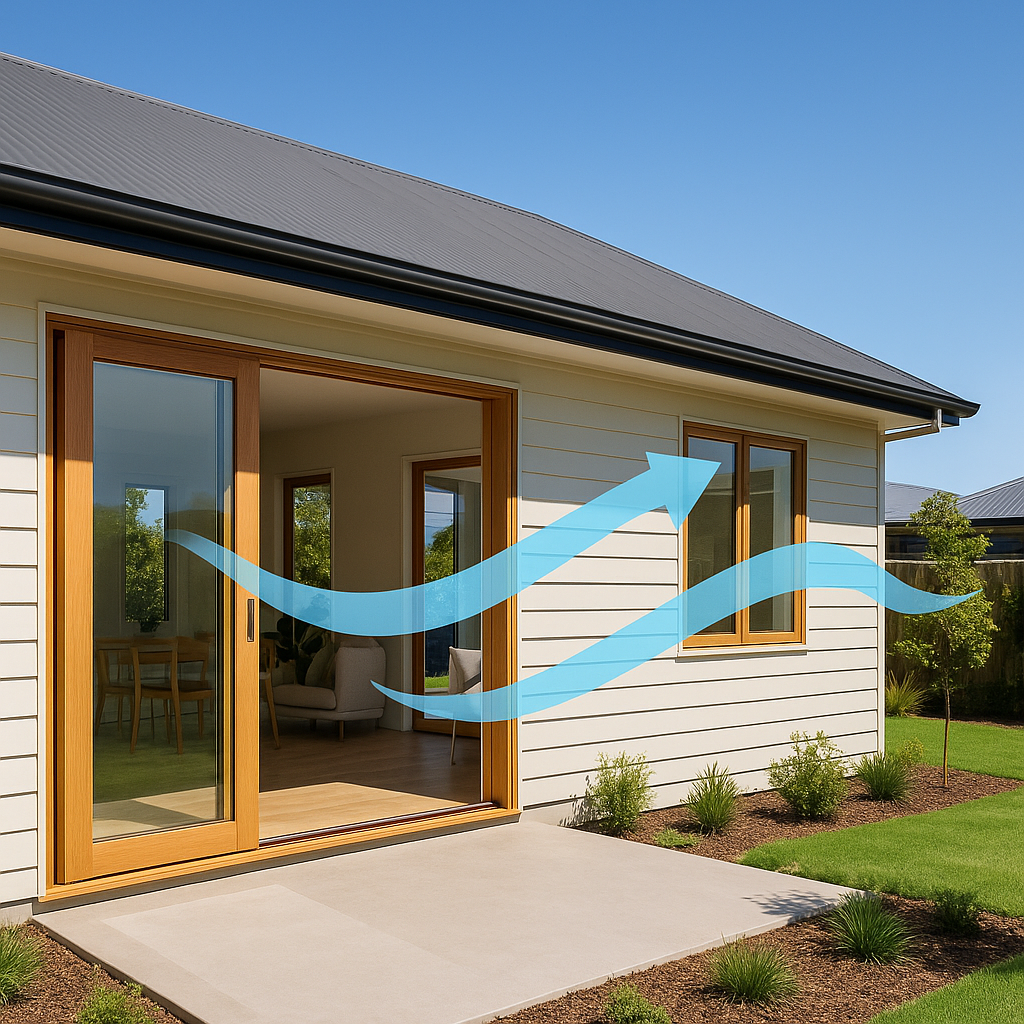
Equally important is airflow. Cross-ventilation is most effective when doors and windows are aligned to capture prevailing breezes, which often come from the northeast in summer along much of Australia’s east coast. Locating operable windows opposite one another, or designing with louvres and sliding doors, enables air to move freely across rooms. This natural ventilation strategy reduces heat build-up, improving thermal comfort without heavy reliance on air-conditioning.
Ultimately, thoughtful positioning of windows and doors goes beyond aesthetics—it directly influences a home’s energy performance, sustainability, and liveability. By considering solar orientation, prevailing wind directions, and room function during the design phase, homeowners and designers can create spaces that feel brighter, cooler, and more connected to their natural environment. This careful planning is an investment in both long-term comfort and environmental responsibility.
No responses yet